
The Ford 7.3L V8 Gas Engine

The Ford 7.3L V8 is the bigger of the Super Duty's two gas engines, rated at 430 horsepower at 5,500 rpm and 485 lb-ft (pound-feet) of torque at 4,000 rpm. Truck people commonly call it the Godzilla; Ford's own name for it is the 7.3L V8 Gas. It is naturally aspirated, meaning it pulls in air at atmospheric pressure with no turbocharger in the intake path. On output it lands between the 6.8L V8 that is standard lower in the lineup and the 6.7L Power Stroke diesels above it. That middle ground is what a lot of contractors, trades, and farm operations across Central Indiana are shopping for: more engine than the base gas V8, without the move to diesel.

The decision behind choosing it is usually the same one: how much gas engine is enough before a diesel starts to make sense. Horsepower rarely settles that on its own. What settles it is how the truck spends its week: what it pulls, how often, and how far it goes with the weight on.
Find What You Need
Jump To
  • What the 7.3L V8 Is
  • How It Compares With the Other Super Duty Engines
  • Which Trims Come With the 7.3L as Standard
  • What Those Numbers Mean in Use
  • Find a Super Duty at Ed Martin Ford
  • Frequently Asked Questions

What the 7.3L V8 Is

The 7.3L is a 90-degree gas V8 with a single camshaft in the block and sequential electronic fuel injection, working through a 10-speed automatic. None of that is exotic, and that is the point.

Specification The 7.3L V8
Ford's name for it 7.3L V8 Gas
Horsepower 430 hp at 5,500 rpm
Torque 485 lb-ft at 4,000 rpm
Aspiration Naturally aspirated, no turbocharger
Engine layout 90-degree V8, single camshaft in the block, sequential electronic fuel injection
Transmission TorqShift G 10-speed SelectShift automatic with Selectable Drive Modes
Drive types 4x2 (rear-wheel drive) or 4x4 (four-wheel drive)
Fuel capacity 34 gal with the Regular Cab (142-inch wheelbase), the SuperCab (164-inch) or the 160-inch-wheelbase Crew Cab; 48 gal with the 176-inch-wheelbase Crew Cab
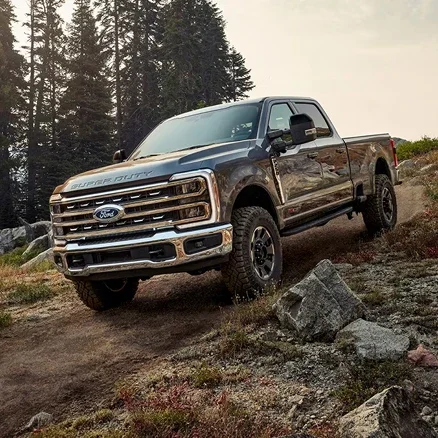
Ford Super Duty with the 7.3L V8 gas engine parked on a rocky forest hillside

That layout line is engineering shorthand. The camshaft sits down in the block instead of up in the cylinder heads, and sequential electronic injection means fuel is metered to each cylinder in its turn rather than to the whole bank at once. Neither detail sells a truck by itself. Together they add up to a big gas V8 built the conventional way.

Two rows matter more than the rest. The first is aspiration: with no turbocharger, the 7.3L makes its numbers on displacement and revs instead of boost, and its peaks sit high up, at 4,000 rpm for torque and 5,500 rpm for horsepower. The second is the transmission. Ten gears give it room to hold the engine near those peaks instead of falling between ratios under load, and Selectable Drive Modes come as part of the same TorqShift G unit. Tank size, on the other hand, is barely an engine question at all: those capacities apply to either gas V8, so 48 gallons comes with the long-wheelbase Crew Cab rather than with the 7.3L.

One thing the 7.3L never comes with: all-wheel drive. Every Super Duty is built as a 4x2 or a 4x4, and the four-wheel-drive version is the one that earns its keep on a salted county road in February.

How It Compares With the Other Super Duty Engines

Ford offers four V8 engines in the Super Duty, and on output the 7.3L sits third of the four. Horsepower and torque are the two figures the engine itself sets.

Super Duty engine Fuel Horsepower Torque
6.8L V8 Gas 405 hp 445 lb-ft
7.3L V8 Gas 430 hp 485 lb-ft
6.7L Power Stroke V8 Turbo diesel 475 hp 1,050 lb-ft
6.7L High-Output Power Stroke V8 Turbo diesel 500 hp 1,200 lb-ft

The torque column is where the lineup shows its shape. Going from the 6.8L to the 7.3L buys 25 hp and 40 lb-ft, a real step, but a step inside the same kind of engine. Going from the 7.3L to the standard 6.7L Power Stroke adds 45 hp and another 565 lb-ft, which is a different kind of engine doing a different kind of job. Fuel is another difference: that standard Power Stroke is also rated to run on B20 biodiesel.

The four engines are really two pairs. The 6.8L and the 7.3L are the same decision at two sizes: how much gas V8 do you want. The Power Strokes are a different decision, because the torque gap between the gas pair and the diesel pair is far wider than the gap inside either pair. Most buyers pick the pair first and the engine second, and the 7.3L is the top of the gas pair.

Output is not the same as capability, though. Towing and payload ratings come from the whole vehicle: the engine, the cab, the box, the drivetrain, and the rear axle all move the number, so the rating that counts is the one on the exact truck in front of you. Give us the loaded weight of what you tow and our sales team can check it against a specific build.

Which Trims Come With the 7.3L as Standard

The vehicles that use the 7.3L V8 are Super Duty trucks, and Ford sets their standard gas engine by trim. The trims that carry it as their standard gas V8 are the ones at the top of the range. The alternator steps up along that same trim divide, which matters if you run equipment off the truck: more amps come with the higher trims, and that is electrical headroom, not luxury.

Standard on King Ranch and Platinum: the 7.3L V8 is the gas engine these two trims are built with, and the same pair carries a 410-amp dual alternator rather than the 250-amp unit standard lower down.

Standard on Lariat, XLT, and XL: the 6.8L V8, at 405 hp and 445 lb-ft, powers the working end of the range, with a 250-amp alternator as the standard electrical setup.

Available on any of them: the 6.7L Power Stroke diesel stays an option across the trim range, so a diesel is on the table whether you start high or low.

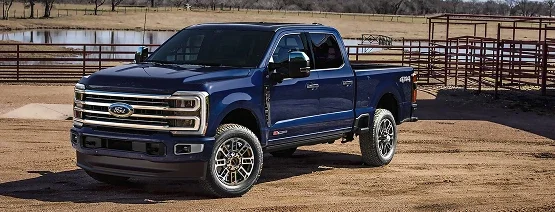
Ford Super Duty Crew Cab in a top trim parked beside ranch fencing

That is how Ford builds the lineup, not what sits under the hood of any one truck. Which engines can be ordered on a trim is a separate question from which one comes as standard, and neither is something to read off a trim badge. Standard engine and only engine are two different things, so the engine a particular Super Duty was built with is spelled out on that truck's own listing. Reading it there beats working backward from a trim badge.

What Those Numbers Mean in Use

No turbocharger: there is no boost to build and nothing to wait on. The 7.3L answers the throttle in a straight line and pulls harder the more you rev it.

Ten gears doing the thinking: with peaks at 4,000 and 5,500 rpm, this engine wants to be kept spinning when it is working, and the TorqShift G 10-speed is what keeps it there. On a grade with a trailer behind you, that is the difference between holding a gear and hunting for one.

Gas or diesel comes down to the week, not the weekend: the two Power Strokes make 1,050 and 1,200 lb-ft against the 7.3L's 485, and that gap exists for trucks that pull heavy most days of their working life. If your heavy days are frequent and long, that is the work the diesel is built for. If the truck hauls materials all week and pulls something serious now and then, the 7.3L is the one worth pricing out first, against the ratings on the exact build. Three plain questions usually settle it: how many days a week the truck is loaded, how far it goes once it is, and whether the heavy work is the job itself or the exception to it.

4x2 or 4x4, and Indiana usually answers that one: rear-wheel drive is lighter and simpler, but winters here come with snow and salt, and plenty of the driving happens off the state routes. Four-wheel drive is available with the 7.3L, and it is worth settling that choice before you order rather than after the first icy morning.

Tank size is a real planning number: most cab and wheelbase combinations carry 34 gallons, and the long-wheelbase Crew Cab carries 48. If you run long days between fill-ups, check which tank the truck you are looking at was built with.

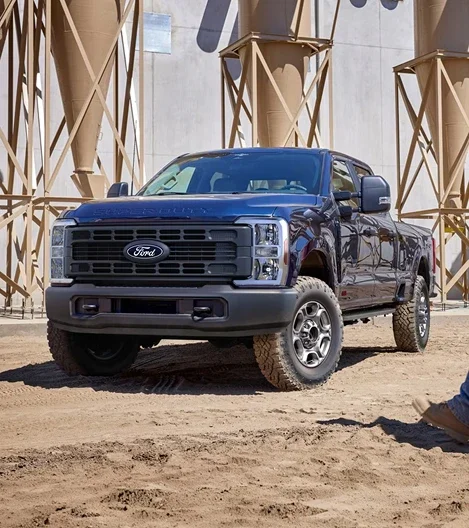
Ford Super Duty Crew Cab at work in a sand and gravel yard
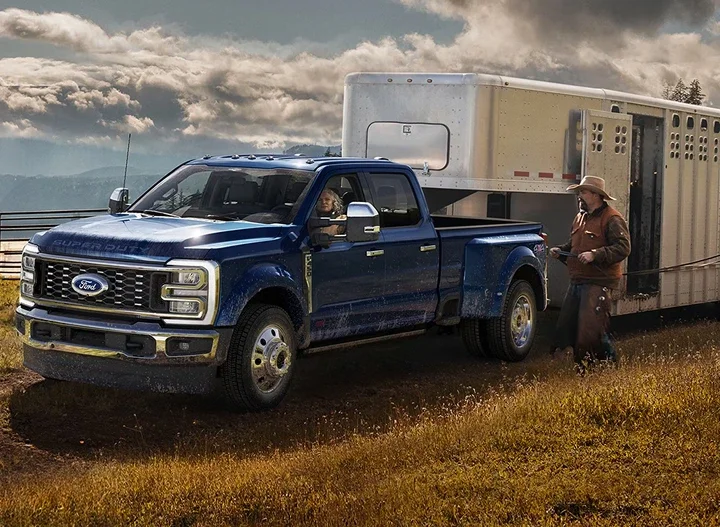
Ford Super Duty dually towing a livestock trailer

Find a Super Duty at Ed Martin Ford

Ed Martin Ford is the only Ford dealership in Madison County. If the 7.3L is the engine you want, start in our Super Duty inventory and check the engine listed on each truck.

Three lines on a listing do most of the deciding: the engine, the cab and box combination, and whether the truck is a 4x2 or a 4x4. Between them they move most of what it can carry and what it can pull, and how it behaves on a wet township road in January. All three are printed there before you ever pick up the phone.

When the build you want is not listed, a factory custom order lets you pick the cab, the trim, and the engine and have the truck built that way instead of settling for the nearest match. Our Ford specials change monthly, so see our new vehicle specials for the latest deals on new trucks and SUVs.

Frequently Asked Questions

How much horsepower does the Ford 7.3L V8 make?

It makes 430 horsepower at 5,500 rpm, plus 485 lb-ft of torque at 4,000 rpm. Every listing shows the engine a given truck was built with, so you can check it on any Super Duty pickup we have listed.

Is the Ford 7.3L V8 turbocharged?

No. It is naturally aspirated, meaning it draws air at atmospheric pressure with no turbocharger. The two Power Stroke engines in the Super Duty lineup are the turbocharged ones, and both are diesels.

What transmission comes with the 7.3L V8?

The TorqShift G 10-speed SelectShift automatic, which includes Selectable Drive Modes. Every Super Duty engine pairs with a version of the 10-speed TorqShift.

Which Super Duty trims come with the 7.3L V8 as standard?

King Ranch and Platinum. XL, XLT, and Lariat carry the 6.8L V8 instead, and the 6.7L Power Stroke diesel is available across the trim range. To confirm the engine in one specific truck, contact Ed Martin Ford and we will read it off the build.

How much can a Super Duty with the 7.3L V8 tow?

That depends on the whole truck, not the engine alone. Cab, box, drivetrain, and rear axle all change the rating, so a 4x4 Crew Cab and a 4x2 Regular Cab with the same engine are rated differently. Bring us the loaded weight of your trailer and we will match it against the rating on a specific build; a good place to start is the Super Duty trucks we have listed.

Is the 7.3L V8 available with four-wheel drive?

Yes. The Super Duty is built in 4x2 (rear-wheel drive) and 4x4 (four-wheel drive), and the 7.3L is offered either way. No Super Duty is sold as an all-wheel-drive truck.

How big is the fuel tank on a gas Super Duty?

It holds 34 gallons on the Regular Cab, the SuperCab, and the 160-inch-wheelbase Crew Cab, or 48 gallons on the 176-inch-wheelbase Crew Cab. Both gas V8s carry the same tanks, so capacity follows the cab and wheelbase rather than the engine.

How does the 7.3L V8 compare with the 6.7L Power Stroke diesel?

The 7.3L makes 430 hp and 485 lb-ft; the standard 6.7L Power Stroke makes 475 hp and 1,050 lb-ft, and the High-Output version makes 500 hp and 1,200 lb-ft. The gap is almost all torque, which is what sustained heavy pulling asks for. The best way to settle it is to drive one of each back to back, and you can schedule a test drive for both.

What size alternator does a Super Duty carry?

It follows the trim. The three lower trims come with a 250-amp alternator as standard, while Platinum and King Ranch carry a 410-amp dual alternator, the same pair that gets the 7.3L as standard equipment.

Can I order a Super Duty with the 7.3L V8 built the way I want?

Yes. A custom factory order lets you specify the cab, the trim, the drivetrain, and the engine, so you get the configuration your work calls for rather than whichever combination happens to be listed.

Where are Ed Martin Ford's current offers listed?

Ford deals change from month to month, and our new Ford specials page is where the current ones are listed.