
2026 Ford Transit Van at Ed Martin Ford, Central Indiana

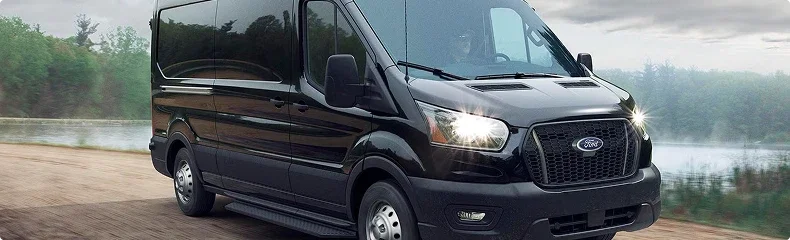
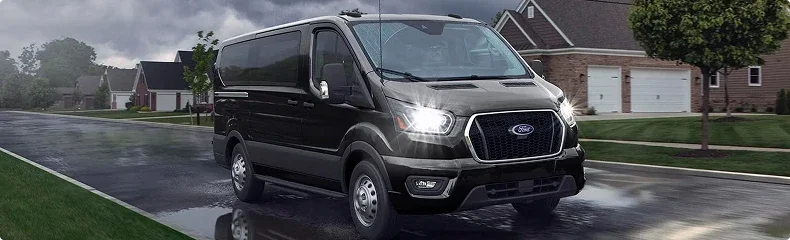
The 2026 Ford Transit is Ford's full-size commercial van, and you order it around the job instead of buying it as one finished package. At Ed Martin Ford in Anderson, you can order it as a Cargo Van, a Passenger Van (XL or XLT), a Cutaway, or a Chassis Cab, with the last two supplied as a cab and frame for a body to be built onto. The Cargo and Passenger bodies come in a choice of roof heights and body lengths. You shape the van around the work instead of shaping the work around the van.

That breadth is the whole point of the Transit. A contractor hauling tools and materials, a parcel fleet running last-mile routes out to customers' doors, a church or shuttle operator moving people, a mobile business working out of the back of the van, and an upfitter who builds a box, service, or specialty body onto a bare chassis all start from the same van and finish somewhere completely different. Underneath, every Transit shares one working foundation: a choice of two gas V6 engines, a 10-speed automatic transmission, Ford's SYNC 4 system on a 12-inch touchscreen, a built-in 5G modem, and Ford Co-Pilot360 driver assistance on every series.

That makes ordering a Transit a sequence of decisions rather than a question of which trim to pick. You settle the body style, the roof height and body length where the body offers a choice, which of the two engines you want, and which factory packages the crew needs, all before an upfitter ever gets involved. The sections below work through those decisions.

Jump To

Jump To
  • Body Styles
  • Engines
  • Built for Anderson
  • Upfit & Packages
  • Technology & Safety
  • Series & Pricing
  • Warranty
  • Custom Order & Fleet
  • FAQ

Body-Style and Configuration Lineup

Body-Style and Configuration Lineup

Body-Style and Configuration Lineup

The Transit is a family of body styles built on one commercial van base. Here is how the series line up and who orders each one.

Series What it is Who typically orders it
Cargo Van Enclosed hauling for tools, materials, parcels, and equipment, and the body most trade upfits start from Contractors, trades, service techs, parcel and last-mile fleets, mobile businesses
Passenger Van XL A work-ready people mover for crews, shuttle runs, and group transport Employers moving crews, churches, shuttle services, and passenger-transport operators
Passenger Van XLT The same people-moving job with upgraded interior and technology features Operators carrying paying or public riders who want a more finished cabin
Cutaway A cab with an open frame behind it, ready for a body to be built onto Box, parcel, and specialty-body upfits
Chassis Cab A cab and frame supplied bare, for service, utility, and ambulance-prep builds Service and utility body builders, ambulance and specialty upfitters

Roof height and length are worth settling early on a Cargo or Passenger van. They affect whether a tech can stand up inside, whether the shelving system you already run will fit, and whether the van clears the doors and loading docks it visits every day, so the right combination follows the work the van does rather than a bigger-is-better rule. The two cab-and-chassis bodies, the Cutaway and the Chassis Cab, sit outside that choice: they are unfinished on purpose, sized behind the cab to whatever body is going onto them. Ordering a Cutaway or a Chassis Cab is not ordering a finished van: you are buying the cab and the frame, and the upfitter supplies the rest.
Engine Lineup

Engine Lineup

Engine Lineup

Both 2026 Transit engines are gas V6s and both run through a 10-speed automatic, so the choice is about how the power arrives, not about two different vans to drive.

Engine Horsepower Torque Transmission
3.5L PFDi V6 (gas) 275 hp at 6,250 rpm 260 lb-ft at 4,000 rpm 10-speed automatic
3.5L EcoBoost V6 (gas) 300 hp at 5,000 rpm 400 lb-ft at 2,500 rpm 10-speed automatic

On a work van, what matters is where the torque shows up. The 3.5L PFDi makes its 260 lb-ft high in the rev range, at 4,000 rpm. The 3.5L EcoBoost makes 400 lb-ft down at 2,500 rpm, which is where a loaded van actually spends its day: pulling away from a stop, climbing a ramp, working a route with a stop on nearly every block. Both engines run through the same 10-speed automatic, so the difference a driver feels between the two comes from the engine rather than from a different transmission.

Neither engine carries an MPG number. The Transit's gross vehicle weight rating (GVWR), the most the van is rated to weigh fully loaded, is over 8,500 pounds, which exempts it from federal Environmental Protection Agency (EPA) fuel-economy testing, so no EPA rating exists for the van.

Ford also builds an all-electric version of this van, the E-Transit, alongside the gas Transit covered here.

Built for Anderson's Work

Built for Anderson's Work

Built for Anderson's Work

Anderson runs on vans. We sit on Scatterfield Road (State Road 9 / 109), the city's main commercial corridor, in a Madison County economy where logistics, advanced manufacturing, healthcare, education, and gaming all keep working vehicles moving every day.

Look at who is doing that work. Freight moves in and out of the area through logistics operators like Carter Express. NTN Driveshaft and Nestlé, both advanced manufacturers, keep supplier, service, and contractor traffic on the road.

Community Hospital Anderson and Ascension St. Vincent Anderson support a healthcare base that generates its own medical-transport and facilities work. The college campuses at Anderson University and Ivy Tech move groups of people on a schedule. Harrah's Hoosier Park Racing & Casino draws steady commercial and shuttle activity. And the trades spread across Madison County need vans that show up loaded and keep working.

Anderson's modern economy came out of the natural gas boom that first drew factories here and decades of vehicle-parts manufacturing at Delco Remy and Guide Lamp, and it has rebuilt since around healthcare, advanced manufacturing, logistics, education, and gaming. That mix is why the commercial-van conversation here is so varied. One week can bring a route-delivery operator, a mechanical contractor, a shuttle service, and a specialty upfitter through the door, each needing a different Transit.

The geography helps. Anderson is the county seat of Madison County and sits on Interstate 69 with quick reach to I-465 and the Indianapolis metro, which puts Anderson on a live last-mile and delivery route rather than at the end of one. State Road 32 heads east toward Muncie and west toward Noblesville, so a service radius drawn from Anderson covers a lot of Central Indiana. Scatterfield Road puts a Ford commercial dealer right on the route your work already travels, which counts on the weekday a van needs work done.

Ed Martin Ford is the only Ford dealership in Madison County. For the ring towns around Anderson, including Pendleton, Lapel, Chesterfield, Alexandria, Elwood, Frankton, Ingalls, and Markleville, the closest place to buy, order, service, and plan an upfit for a Transit is here rather than across the metro. For a business running vans, the drive in for a repair is a real operating cost, and keeping it short keeps vans working.

And because the Transit can be ordered as a Cutaway or Chassis Cab, an order placed here can end up as a box truck, a parcel body, or an ambulance, each one finished by an upfitter on the chassis that was ordered.

Upfit and Work Packages

Upfit and Work Packages

Upfit and Work Packages

The Transit is meant to be finished for the work, and Ford's factory packages get it most of the way there before an upfitter ever touches it. Ordering the right package up front is usually cleaner than bolting equipment on later.

Package What it is for Where it is offered
Shelving and Trade Packages Organized, work-ready cargo space for contractors and service techs Extended-Length Cargo Van
Ambulance Prep Package Specialty medical-body upfits Chassis Cab
Interior Upgrade Package A more finished working cab for people who live in the van all day Cargo Van
Ford Co-Pilot360 Assist 2.0 Advanced driver aids, including blind-spot monitoring and adaptive cruise control Standard on Passenger Van XLT, optional on Cargo Van and Passenger Van XL

Two more factory packages can be added to a Transit order: the Parcel Delivery Package, built around last-mile and route delivery work, and the Ford Connectivity Package.

Past the packages, the two cab-and-chassis configurations exist to hand an upfitter a clean, known base for box, parcel, service, and utility bodies. That is why so many specialty vehicles on the road started out as a Transit chassis.

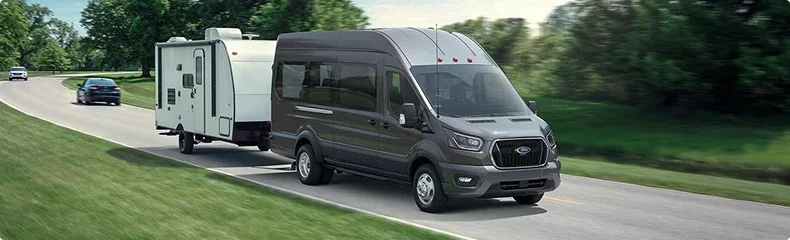
A word on capability. Payload, cargo volume, towing capacity, the exact GVWR, and seat counts swing a long way between Transit builds, because they follow the roof height, body length, and configuration you order. There is no single set of Transit numbers to quote: each rating belongs to the exact van being built.

Technology and Driver Assistance

Technology and Driver Assistance

Technology and Driver Assistance

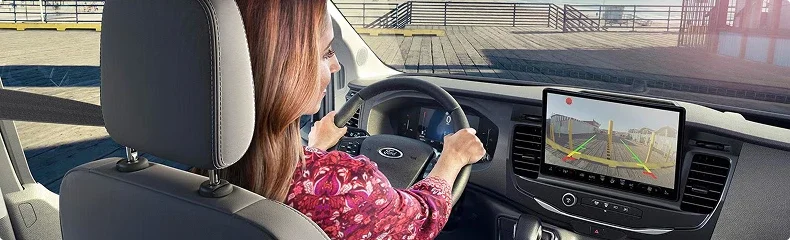
Every 2026 Transit series comes standard with Ford's SYNC 4 system on a 12-inch center touchscreen, an 8-inch driver display, and a built-in 5G modem for connected features. Those three pieces are the same whether you order a base Cargo Van or a Passenger Van XLT, so a driver moving between shared vans never has to relearn the dash, and what the XLT adds sits on top of that shared base.

Ford Co-Pilot360 driver assistance is standard on every series too, with two items in the set handled differently on the bodies noted in the table below. The more advanced Ford Co-Pilot360 Assist 2.0 group is where the equipment differs from one body to the next, and that split is the single most common misunderstanding we see on a Transit order.

Driver-assistance feature Standard Ford Co-Pilot360 Ford Co-Pilot360 Assist 2.0
Pre-Collision Assist with Automatic Emergency Braking (Pedestrian Detection, Forward Collision Warning, oncoming braking support) Standard Included
Lane-Keeping System Standard Included
Camera-Only Evasive Steering Assist Standard Included
Auto High-Beam Headlamps Standard Included
Intersection Assist Standard Included
Post-Collision Braking Standard Included
Rear View Camera Standard (supplied as a kit for the upfit body on Cutaway and Chassis Cab) Included
Rear Parking Sensors Standard on Cargo Van and Passenger Van Included
Front Parking Sensors Standard Included
Adaptive Cruise Control with Stop-and-Go and Lane Centering Not included Added by Assist 2.0
BLIS (Blind Spot Information System) with Cross-Traffic Alert Not included Added by Assist 2.0
360-Degree Camera Not included Added by Assist 2.0
Reverse Brake Assist Not included Added by Assist 2.0
Connected Navigation Not included Added by Assist 2.0

Ford Co-Pilot360 Assist 2.0 is standard on the Passenger Van XLT and optional on the Cargo Van and Passenger Van XL. Blind-spot monitoring and adaptive cruise come along automatically with the XLT, and on the XL and Cargo bodies they have to be added to the order. They are not on every Transit by default. On a van with long blind spots running highway miles, that is a decision to make when the van is ordered, not after it is delivered.

On safety ratings, the federal National Highway Traffic Safety Administration (NHTSA) has not rated the Transit, so it carries no overall star rating.

Series and Starting Prices

Series and Starting Prices

Series and Starting Prices

Launch prices for the 2026 Transit van bodies are below. These are launch manufacturer's suggested retail prices (MSRPs), and they exclude destination and delivery charges, the cost of shipping the van from the factory. The van you actually order usually costs more, depending on the body, the roof height, the engine, and the packages on it.

Series MSRP at Launch (excludes destination) Best For
Cargo Van From $48,400 Trades, service techs, and parcel and last-mile routes
Passenger Van XL From $58,680 Crew transport, shuttle runs, and group travel
Passenger Van XLT From $61,655 Operators who want the more finished cabin for their riders

Pricing on the two cab-and-chassis bodies follows the configuration and the body being built, so those are quoted per build rather than published as a starting figure.

Paint is another decision to make early. The Transit is offered in Oxford White, Race Red, Agate Black Metallic, Ingot Silver Metallic, Carbonized Gray Metallic, and Blue Metallic, and the metallic finishes carry an extra cost. School Bus Yellow and Wild Green are fleet-only colors, available on qualifying fleet orders rather than a standard retail order. That matters most if the van is going to wear graphics or match vehicles you already run.

For current savings, check our new vehicle specials.

Warranty and Ownership

Warranty and Ownership

Warranty and Ownership

The 2026 Transit is covered by Ford's standard new-vehicle warranties.

Coverage Term
Bumper-to-bumper 3 years / 36,000 miles
Powertrain 5 years / 60,000 miles
Safety restraint 5 years / 60,000 miles
Corrosion (perforation) 5 years / unlimited miles
Roadside assistance 5 years / 60,000 miles

Read those terms against your real mileage. Each one ends at whichever limit comes first, so a delivery or service van piling on miles can pass the 36,000-mile bumper-to-bumper limit long before the three-year mark, while a van that stays close to home hits the calendar limit first. That gap is worth thinking through when you plan how long a van stays in service and when it gets replaced.

The terms above cover Transit builds up to 19,500 pounds GVWR. Heavier Chassis Cab and Cutaway builds rated above that weight can carry different coverage.

Custom Order and Fleet Buying at Ed Martin Ford

Custom Order and Fleet Buying at Ed Martin Ford

Custom Order and Fleet Buying at Ed Martin Ford

There is no other Ford store in Madison County, and this is where local businesses build a Transit the way the work needs it. Through Ford's custom factory order process, you choose body style, engine, packages, and equipment, plus roof height and body length on a Cargo Van or a Passenger Van, and the van gets built to that order instead of you settling for whatever happens to be sitting on a lot. For a commercial buyer that is usually the better path. A van that is one roof height short, or missing the package the crew needs, is a problem you live with for years, and ordering it right removes the compromise.

A cab-and-chassis order works the same way with one extra step. You order the base, the upfitter builds the body, and the two have to line up. Talking the finished vehicle through with us before the chassis is ordered is how you avoid a frame that does not suit the body you wanted.

For a business running more than one vehicle, fleet ordering here means planning a group of Transits around the jobs they actually do, holding the specs consistent so drivers and technicians are working with the same equipment, coordinating the upfits, and keeping ordering and service close to home on Scatterfield Road. Whether it is one work van or a whole set of them, the buying, ordering, and service all stay in Anderson.

Find Your Transit at Ed Martin Ford

Find Your Transit at Ed Martin Ford

Find Your Transit at Ed Martin Ford

Put a 2026 Ford Transit to work. Browse the current Ford Transit inventory at Ed Martin Ford, and if the exact configuration is not on the lot, start a custom factory order and we will build it to your order. The full new Ford lineup in Anderson is here as well.

To work through body styles, roof heights, upfits, or a fleet order with our commercial team, contact Ed Martin Ford and we will work out the right Transit for the job with you.

Frequently Asked Questions

What body styles does the 2026 Ford Transit come in?

The Transit is offered as a Cargo Van, a Passenger Van (XL and XLT), a Cutaway, and a Chassis Cab, and on the Cargo and Passenger vans you also choose the roof height and the body length. That is why two Transits can look completely different and do completely different jobs. See what is available or order a specific configuration through Ed Martin Ford's custom factory order.

What is the difference between the Cargo Van and the Passenger Van?

The Cargo Van is an enclosed hauler for tools, materials, and parcels, and it is the body most trade upfits start from. The Passenger Van (XL and XLT) is set up to move crews and riders instead, with the XLT adding upgraded interior and technology features.

What is the difference between a Cutaway and a Chassis Cab?

Both are cab-and-chassis builds meant to be finished by an upfitter rather than driven away complete. The Cutaway underpins box, parcel, and specialty bodies, while the Chassis Cab suits service, utility, and ambulance-prep upfits. On both, the rear view camera comes as a kit for the upfit body.

Can Ed Martin Ford order a Transit built to my specifications?

Yes. We are the only Ford store in Madison County, and we place a custom factory order with the body style and engine you need, the roof and body length if it is a Cargo or Passenger van, plus the packages the work calls for, so you are not limited to what is already on the lot.

Can the Transit be upfitted for parcel delivery, trades, or an ambulance?

Yes. Ford offers a Parcel Delivery Package for last-mile and route work, Shelving and Trade Packages on the Extended-Length Cargo Van, and an Ambulance Prep Package on the Chassis Cab, and both cab-and-chassis configurations hand an upfitter a clean base for box and specialty bodies.

What engines does the 2026 Transit offer?

The Transit offers a 3.5L PFDi V6 gas engine rated at 275 horsepower and 260 lb-ft of torque, and a 3.5L EcoBoost V6 gas engine rated at 300 horsepower and 400 lb-ft of torque. Both use the same 10-speed automatic. The EcoBoost makes its peak torque at 2,500 rpm, which is the useful part of the range for a loaded van.

How much can a 2026 Transit carry or tow?

Payload, cargo volume, towing, and seat counts change substantially with the roof height, body length, and configuration you order, so there is no single Transit figure to quote. The ratings that count are the ones for the exact build, and our commercial team can confirm them for the configuration you are considering before the order goes in.

How much does the 2026 Ford Transit cost?

The Cargo Van launched at $48,400, the Passenger Van XL at $58,680, and the XLT at $61,655. Those are launch manufacturer's suggested retail prices and exclude destination and delivery charges. Cab-and-chassis pricing follows the configuration and the body being built, so it is quoted per build. Current new vehicle specials are listed on the site.

What driver-assistance features are standard?

Ford Co-Pilot360 is standard on every Transit series and includes Pre-Collision Assist with Automatic Emergency Braking, a Lane-Keeping System, Camera-Only Evasive Steering Assist, Auto High-Beam Headlamps, Intersection Assist, Post-Collision Braking, and a Rear View Camera, among other aids. On the Cutaway and Chassis Cab, the rear view camera is provided as a kit for the upfit body.

Does the 2026 Transit have blind-spot monitoring and adaptive cruise control?

Those features come with Ford Co-Pilot360 Assist 2.0, which is standard on the XLT passenger body and optional on the Cargo Van as well as the XL. Assist 2.0 adds BLIS with Cross-Traffic Alert and Adaptive Cruise Control with Stop-and-Go, along with a 360-Degree Camera, Lane Centering, Reverse Brake Assist, and Connected Navigation. They are not part of the standard Co-Pilot360 set, so the body style and the option list decide whether a given Transit has them.

What warranty covers the 2026 Transit?

The Transit carries a 3-year / 36,000-mile bumper-to-bumper warranty, a 5-year / 60,000-mile powertrain warranty, 5-year / 60,000-mile safety restraint coverage, 5-year / unlimited-mile corrosion (perforation) coverage, and 5-year / 60,000-mile roadside assistance. Each ends at whichever limit comes first, and heavier Chassis Cab and Cutaway builds can carry different terms.

Is there an all-electric version?

Yes. Ford offers the all-electric E-Transit alongside the gas Transit. Look at the E-Transit and the rest of the electric lineup through Ed Martin Ford's electric vehicle inventory.

What is the 2026 Transit's fuel economy or MPG?

The Transit's gross vehicle weight rating (GVWR), the most the van is rated to weigh fully loaded, is over 8,500 pounds, which exempts it from federal Environmental Protection Agency (EPA) fuel-economy testing, so it has no official EPA rating and no MPG figure.